
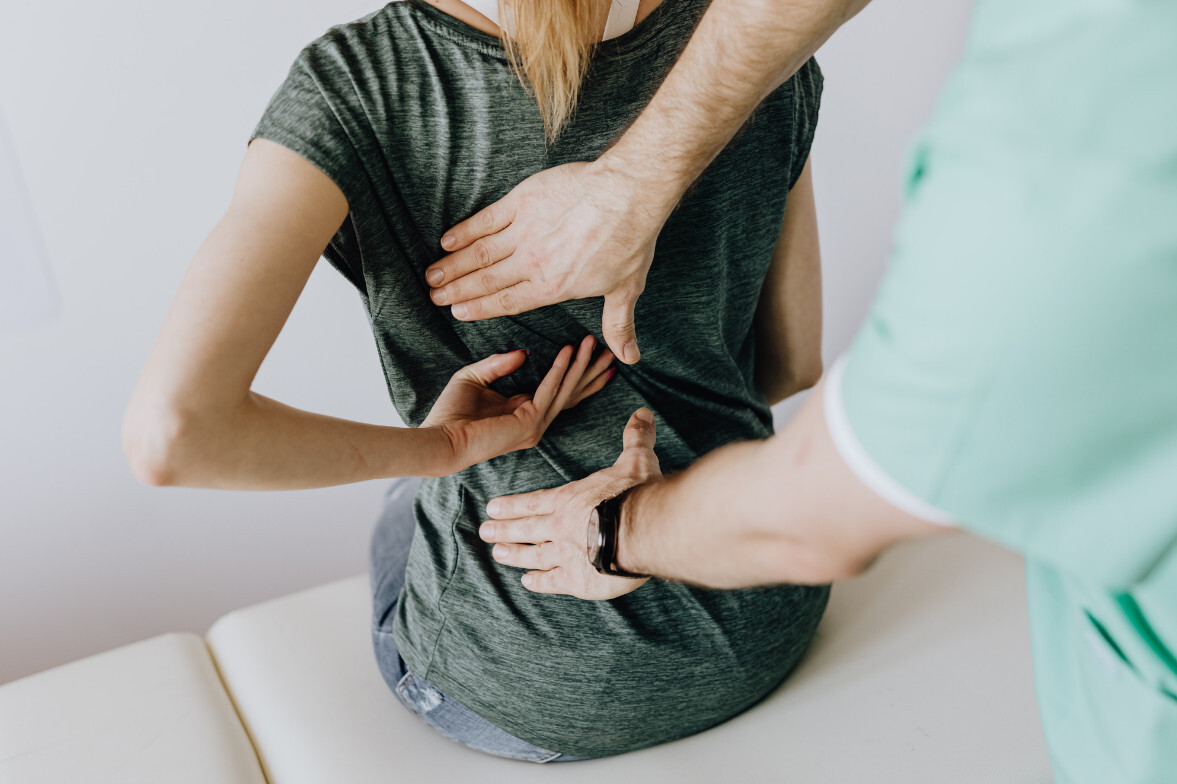
If your low back pain keeps coming back after physical therapy, injections, or even surgery, it is usually because the root cause was never addressed.
Millions of people cycle through the same providers, get temporary relief, and end up back in pain. There is a predictable reason this happens — and it comes down to one thing almost every provider never checks.
Why Treatment Works Temporarily But Never Holds
Every tissue in your body has a capacity — how much load it can handle before producing symptoms. To understand how this works, read our breakdown of the load vs. capacity model here. When load consistently exceeds that capacity, pain is the result. Most treatments reduce symptoms by temporarily taking load off the tissue. Injections calm inflammation. Adjustments restore joint motion. Massage reduces tension. The problem is that none of these change the underlying reason the tissue was overloaded in the first place.
When treatment stops, load returns. And so does pain.
The Piece Almost Every Provider Misses: Adhesion
Adhesion is dense, fibrous scar tissue that forms inside muscles, around nerves, and between joint structures when soft tissue is chronically overloaded or injured. It is the most common and most overlooked cause of chronic mechanical pain.
Here is why it gets missed: adhesion does not show up on MRI or X-ray. A scan can look completely normal while a patient has significant adhesion causing their pain. Providers treating based on imaging alone will miss it every time.
Adhesion reduces tissue capacity in two ways. It limits range of motion by physically restricting how far a tissue can move. And it weakens the tissue by preventing normal force production. If you have been told your MRI looks normal but you are still in pain, this post explains exactly why that happens.
Why Strengthening Without Removing Adhesion Fails
Strengthening is valuable — but only when the tissue can move freely first. If adhesion is present, strengthening exercises build force into a restricted system. The tissue tightens further, compensation patterns deepen, and pain either persists or returns faster after activity.
This is why so many patients feel better during PT and worse when they stop. The exercises were managing load temporarily, but the adhesion driving the restriction was never addressed.
What Has to Happen First
At Resolve STS in Charlotte we use a 6-step system called Adhesion Release Methods to find and fix adhesion before anything else. You can read the complete overview of how ARM works here. The process starts with a detailed history to identify which tissues are overloaded and why. Then we use specific movement tests and hands-on palpation to locate the exact restrictions. We treat the adhesion directly, then immediately re-test the same movement to confirm the tissue changed.
When adhesion is removed, range improves. Load distributes across more tissue. The pain generator gets unloaded. And the results hold — because the mechanical problem has been solved, not just quieted.
Common Conditions We See at Resolve STS Charlotte
Most of our Charlotte patients come to us with chronic low back pain that has failed previous treatment, or sciatica and nerve entrapment that has not responded to standard care. Many also have disc-related symptoms that keep returning. Here is why disc pain specifically keeps coming back after treatment — and what needs to happen differently.
Who We See
Our patients in the SouthPark area of Charlotte typically come to us after seeing three or more providers with no lasting improvement. Many have had injections. Some have had surgery. Most have done extensive PT. They are not failing — they have simply never had the adhesion component addressed.
If your back pain has improved before but never held, or if nothing has worked at all, a consultation is the right first step. Book a consultation with Zac here so we can take your full history, identify the pattern, and tell you honestly whether adhesion is driving your symptoms.
Frequently Asked Questions
- Why does back pain keep coming back after treatment? In many cases, it is because treatments calm symptoms temporarily without removing the underlying mechanical restrictions — like adhesion — that keep the tissue overloaded. When load returns to an unchanged system, symptoms return.
- Can adhesion cause nerve pain? Yes. Adhesion forms around and between nerve structures, restricting their ability to move and lengthen freely. This is one of the most common and most missed causes of chronic nerve-related symptoms.
- Why didn't physical therapy fix my pain? PT is valuable for building strength and managing load — but if adhesion is present, exercises load a restricted system. The restriction needs to be removed before strength work will hold.
- Can you have serious pain with a completely normal MRI? Absolutely. Adhesion does not appear on imaging. Many patients with significant soft tissue restriction have scans that read as normal or near-normal.
- How is Adhesion Release Methods different from massage or chiropractic? ARM is a 6-step diagnostic and treatment system that targets specific tissues, uses measurable movement tests, and re-tests immediately after treatment to confirm change. It is not general soft tissue work.
Ready to get started?
If you are a good fit, you do not need to wait months. Our system is designed so you can get results with the first available provider on our team.
Most patients start with the first available appointment and get the same process and results.

Zac Breedlove
Contact Me
.jpg)
.jpg)
