
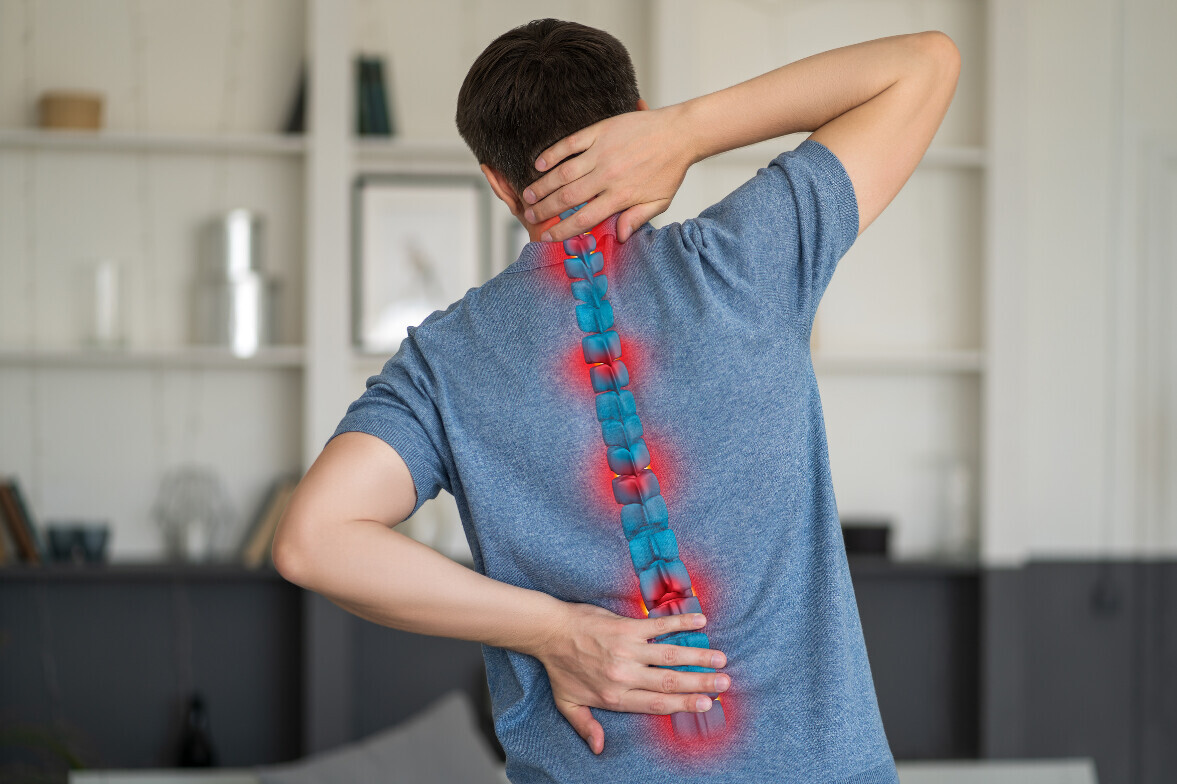
You probably didn’t notice when it started.
At some point, sitting just became different.
You used to be able to sit through work, a drive, a meal without thinking about it. Now you catch yourself shifting constantly, leaning to one side, or standing up more often than you used to.
Maybe it starts around 20–30 minutes in. A dull ache at first. Then stiffness. Then that feeling where you need to move, even if you’re trying to ignore it.
And the part that bothers most people isn’t just the discomfort—it’s the change.
Nothing dramatic happened. No injury. No clear moment.
But your tolerance dropped.
What Actually Changed
Most people assume this is a posture problem or that their muscles are just tight.
That’s not usually the full picture.
What’s actually happening is that your body is becoming less tolerant to the load that sitting places on your spine.
Sitting isn’t inherently bad. But it is a sustained position that increases pressure through certain parts of your spine—especially the discs.
If everything is functioning well, your body handles that without issue.
But when a specific area starts taking more load than it should, that’s when sitting starts to feel different. Not immediately painful—just less forgiving.
Sitting Is a Load Problem, Not Just a Posture Problem
There’s a common idea that sitting up straight—especially at the edge of your chair—is better posture.
In reality, that position often does the opposite of what people expect.
When you sit at the edge of a chair without back support, your spine is responsible for holding you upright the entire time. Over time, that increases the demand on the lower back and the discs.
Research has consistently shown that unsupported or forward-leaning sitting increases disc pressure compared to supported sitting or standing.
That doesn’t matter much when your system is tolerating load well.
But once tolerance starts to drop, that same position becomes a problem much faster.
Why Your Tolerance Is Getting Worse
It’s not just that sitting hurts—it’s that:
-
it starts sooner than it used to
-
it builds faster
-
it takes longer to calm down
That’s a sign that a specific area is being repeatedly loaded without enough capacity to handle it.
At first, your body compensates.
You shift. You adjust. You stand up more often.
But over time, those adjustments stop being enough.
That’s when the symptoms become more consistent.
When It Starts Moving Beyond Your Back
For some people, it stays localized.
For others, it starts to change.
You might notice:
-
an ache into the glute
-
tightness down the back of the leg
-
numbness or tingling when sitting longer
That’s not random.
That’s when the system starts involving nerve sensitivity, not just local discomfort.
And sitting becomes even less tolerable.
The Part Most People Get Wrong About “Fixing Their Posture”
A lot of people try to solve this by forcing themselves to sit more upright.
They sit at the edge of the chair. Pull their shoulders back. Try to “hold good posture.”
The problem is that this often increases load instead of reducing it.
If your spine doesn’t have support behind it, it has to do all the work itself.
Over time, that load ends up in the passive structures—the discs and surrounding tissues.
A Simple Adjustment That Actually Changes the Load
Instead of sitting at the edge of your chair, shift how you’re supported.
-
Slide your hips all the way back in the chair
-
Let your back make contact with the backrest
-
Allow a slight lean instead of forcing yourself upright
-
Make sure the support reaches your mid-back, not just your lower back
This is often referred to as a sit–slide–lean position.
It’s simple, but it changes something important:
Your spine is no longer holding everything up on its own.
That reduces how quickly pressure builds in the areas that are already sensitive.
For a lot of people, this immediately changes how long they can sit before symptoms start.
Why It Keeps Coming Back
Rest helps.
Standing helps.
Moving helps.
But every time you go back to sitting, the same load goes back into the same place.
If nothing about how that load is handled has changed, the result doesn’t change either.
That’s why this tends to feel like a cycle:
-
sit → symptoms build
-
move → symptoms ease
-
sit again → repeat
Where This Starts to Make Sense
If sitting has become something you have to manage instead of something you can ignore, that’s not random.
It’s a sign that your system is losing tolerance to a very common, very repeatable load.
If you’ve already tried stretching, posture changes, or just pushing through it without real change, you’re likely missing the underlying reason it keeps showing up.
Why Most Back Pain Treatments Fail and What Actually Works
What To Do Next
If your tolerance to sitting is decreasing, the goal isn’t just to get through the day with less discomfort.
It’s to understand why that load is being handled the way it is—and why one area keeps taking more than it should.
Book here
Resolve Soft Tissue & Spine | Charlotte, NC
FAQ
Why does my back hurt more when I sit than when I stand?
Sitting places more sustained pressure through the spine, especially the discs, compared to standing. If a specific area isn’t tolerating load well, sitting exposes that more quickly.
Why can I sit for less time than I used to?
That’s a sign your tolerance is decreasing. A specific part of your spine is likely being overloaded repeatedly, and your body is becoming more sensitive to that load.
Is sitting at the edge of my chair better posture?
Not necessarily. Sitting without back support often increases the load on your spine because your body has to hold itself upright the entire time.
Why do I feel better when I stand up or walk around?
Because you’re changing the load. Movement redistributes pressure and gives the irritated area a break.
Why does the pain sometimes go into my leg?
That’s usually a sign that nerve sensitivity is becoming part of the picture, not just local back discomfort.
Does a better chair fix this?
It can help, but it doesn’t solve why your body isn’t tolerating the load in the first place. That’s why symptoms often return even with ergonomic changes.
Is this something serious?
Not necessarily, but it is something that tends to progress if ignored. Decreasing tolerance is usually an early warning sign.
You have to change how your body is handling load—especially during sitting. Until that changes, the pattern usually continues.

Zac Breedlove
Contact Me
.jpg)
.jpg)
